How do Bloggers Make Money?

A couple of weeks ago, a friend asked me how bloggers make money. He never met anyone who was a blogger; he knew plenty of Twitch streamers, bloggers, and TikTokers, but nobody who was an old-school blogger.

While this is not a comprehensive list of ways bloggers make money, here are just a few ways that I either make money now or have made money in the past.

Brand deals: Brand deals are a big one. Brands send bloggers products or provide services to facilitate reviews or for advertising on blogs and related social media. I have done brand deals before, and they are usually a lot of work, but it is always fun to try out a new product or service that you might otherwise not be able to afford. 

Affiliate marketing: Bloggers sometimes opt to work with advertising networks. Affiliate marketing links consumers to products and services. Bloggers receive a small commission when links are clicked and when purchases are made after clicking through a link.

I use a few affiliate marketing networks such as Shopher (formerly MySavings) and Share A Sale. I am an Amazon affiliate as well. A lot of affiliate marketing networks have a small pay-per-click fee of a few cents per click. So, visiting links in bloggers’ posts, either on their blogs or their affiliated social media, can help bloggers a little bit.

Selling products or services: Some bloggers sell products. Printables are very popular. Sometimes through Etsy, but also sometimes directly through their own websites.

Some blog or cell services like exclusive content (Patreon), consulting services, or classes specializing in their blog niche. Many years ago, I used to teach couponing/frugal living classes in my local area. While the classes themselves were free, I sold newspaper subscriptions, and that’s how I made money. This is back in the days when most coupons came in the Sunday paper, and rebate apps like I bought it or not common.

Referral credits: When bloggers share apps or services, oftentimes the app service offers a referral incentive. Examples include Ibotta, Fetch Rewards, and Venmo. They frequently have incentives of a few dollars (or the point value equivalent), usually up to about $10. 

Of course, the more a blogger posts, and the more eyes are on the content, the greater the opportunity to earn money.

Supporting your local blogger by visiting a blog for even five minutes or scrolling through a post is a great way to support a blogger. Read a few posts and share on social media if you find something that resonates. Leave a comment on their social media. These small steps can really help increase a blogger’s reach, which opens them up to being offered more lucrative opportunities.

Managing a Household with Neurodivergencies (ADHD, ASD, etc.)

Earlier this week my friend Sam posted on Facebook, “Neurodivergent Friends what are some tools you use with others that help you with daily life, communication, relationships?”

A few friends posted that they needed help with meal prep, day-to-day stuff, and as y’all know, that’s my bag, baby!

Both my kids are Neurodivergent (ADHD/ASD and ADHD), and their dad has ADHD (combined type/ C) and because of that, we’ve had to make some adjustments to our daily life and how we function. And while our processes and schedules may not work for everyone, hopefully, these tips give you some idea and hope if you need it.

Some of these directly affect/benefit the kids, and some make my life easier, which in turn makes their lives easier.

Having an accurate(ish) pantry, fridge, and freezer inventory. I have made my own sheets in the past (using Canva), but the ones from Organized Home are great.

Meal Prep and meal planning (this includes using Dream Dinners once every few months). This frees up time each night to read, hang out, bathe, and get kids ready for bed.

Meal Prep can be as easy as cut up veggies, fruit, pre-portioned foods, and easy meals or side dishes prepared in advance that only need to be heated up to avoid wasting money eating out because “there is nothing to eat”. Also having one night for take-out. And I have a whiteboard that lists our meal plan for the week- I try and post it weekly on Instagram.

The Snack Box- I also organized our fridge and pantry to be more ND-friendly. Stuff that should be eaten (healthy food like fruit, cheese sticks, yogurt, etc.) is at kid eye level in clear packaging and is labeled (I use expo markers on my Rubbermaid containers), and I have a “Snack box” in the pantry that is available 24/7 for hungry faces. It’s got individually portioned shelf-stable snacks and meal components. And on days when I am too tired/rushed to cook we have “Meal of snacks” where I serve a variety of snacks on old-school sectioned cafeteria trays- fruits, veggies, crackers, cheese, cookies, and a drink (juice or iced tea is a hit).

We have a list of snacks on the fridge so the kids know what there is to snack on. It is a visual list (I drew it), and when we are out of specific items, I cover the picture with a piece of posit note.

Calendars– in the kitchen, and one in each bedroom. I update them weekly, plus the grownups use the calendars on their phones and we have a shared family calendar. Kids get reminders each day in the morning and afternoon of any appointments or events that will take place during the day. The visual and auditory reminders really help cement the appointment in their mind.

Visual reminders– next to the front door at eye level there is a sign that reminds us we need: cellphone, wallet, keys, and garage door opener. It’s laminated.

Visual schedule– this is mainly for the kids. I drew up a daily schedule using words and pictures. I wrote a post about it here.

Lists– Everyone has a “Care tasks” list each week that includes appts, returning borrowed items, and tasks to do throughout the week. You can read about my weekly Care Tasks here. 

Larger font digital clock with day of the week, date, and what part of the day (morning, afternoon, evening, night). The kids can read a clock, but it can take time to engage their brains and count by 5’s, but the “old people clock” as it was marketed on Amazon helps them instantly and helps a lot with the “is it time for xxxxx yet?!?!”

Using your phone to stay on top of details- I saw this on Facebook in a group and I’ve started doing this. If you have an iPhone, there is a notes section in each contact. I’ve seen them used to keep track of favorite fast food at various restaurants, favorite foods/drinks, clothing sizes and brands, favorite colors, birthdays, and anniversaries. It’s such a game changer.

The fidget/stim box– we have a plastic box full of fidget/stim toys for everyone to grab when they need to focus. And everyone has some in their room too. This includes headphones to cut down on loud sounds (I buy the landscapers kind from harbor freight). We have 3 pairs in the house and two pairs in the car. For those not familiar- fidget toys can help calm the body so the mind can focus.

Some favorites include pop-its, hand strengthening eggs, fidget cubes, fidget spinners, stretchy tubes, pop tubes, and stress balls (the kind with Orbeez are super satisfying). Amazon sells really great fidget toys mutli-packs.

Medication Boxes- We refill our medication boxes each week (both AM and PM).  The three of us take our meds together each morning at breakfast time. Our medication boxes live on the kitchen counter, along with our pill minders: Jon Cena and Skeletor.

Stuff has a place– The kid’s shoes and backpacks are always by the door during the school year, ready to be cleaned out and refilled each night. My car keys and purse live in the same spot, the pool key has a special spot. The extra toilet paper and paper towels are always in the same spot (under the front bathroom sink). These are just a few examples of the ways that we remind ourselves and create routines. Creating routines can give us a sense of normalcy and be calming.

The Family Binder– One last thing that doesn’t directly “help” the kids but helps the family, especially in times of emergency is the family binder. I’ve had one since 2010 in various incarnations. I have a really old post about it here.  It’s basically my brain in paper form. It’s got all of our important papers, insurance info, important phone numbers, policy numbers, warranty information, receipts for expensive/valuable stuff, copies of most recent IEPS, copies of diagnosis paperwork, lists of everyone’s meds, doctors info, etc. Think of it as all the info you’d need if you lost power for an extended period, your house burned down, or there was a tornado.

There are a lot of other things that we do in our home to help the kids- keep them safe, regulated, and happy. The stuff listed above is just a small sample. Everyone’s home runs differently. And this was and continues to be a lot of work. The examples above are continually changing, and evolving in our home, and are a combination of 11+ years of hard work, learning, and failing. Some of this stuff I did to try and get organized in my late 20s, even before I was married and had kids.


Easy Home Maintenance: Cleaning Your Box Fans!

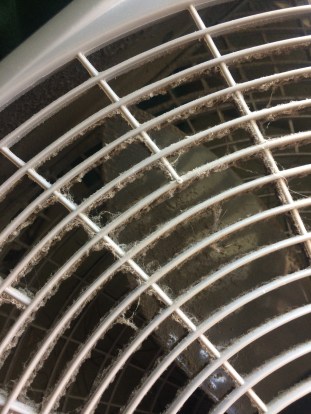
Screen Shot 2019-09-15 at 7.35.48 PM.pngRecently, we noticed that our box fans weren’t providing much cool air. Before dropping over $150 to replace them all, I decided to see if cleaning them would improve their airflow capabilities. After all, they were still functioning mechanically, they weren’t putting out the air flow they used to.

With temperatures in excess of 80 degrees almost all year round here, box fans are a needed appliance in our home. We can’t go without them, as running the AC is cost-prohibitive.

IMG_7562.jpg
Oh dear.

These fans are all about a year old, and while I have vacuumed the front and back of them previously (I do it once a week), they had never been taken apart and cleaned.

Gather all the tools needed before you start. For this job you will need:

  • A sheet to cover your work area.
  • A screwdriver (our fans all have Philips head screws)
  • A dish to hold the screws while the fan is disassembled
  • All-purpose cleaner. I used Comet Lilac Bliss- it’s what we had in the house, and it worked really well.
  • A stiff-bristled brush. I used the brush I use to scrub the soap scum/hard water deposits out of the bathtubs (like this)
  • Rags or really scratchy paper towels. You need something that will trap the dirt.
  • Vacuum Cleaner with a brush attachment.
IMG_7564.jpg
Before: This stuff was tough to scrub off!
IMG_7580.jpg
Once again, my Dyson Vacuum saves the day!
59166257278__479FF905-70DB-489B-B11F-0BBCA1E137B7
After: So fresh and so clean!

Here are my tips for deep cleaning your fans-

    1. UNPLUG THEM! It seems like a no-brainer, but I’m going to remind you to not clean appliances that are still plugged in.
    2. Remove the front and back plastic pieces of the fan. Ours were held together with 6 screws.
    3. To remove the dirt/fuzz/cat/hair/whatever grossness that was on the fan front and back, I placed them in the bathtub and sprayed them down with all-purpose cleaner. I allowed them to sit for about 20 minutes while I cleaned the fan blade and fan case.
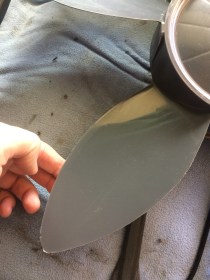
    4. Using all-purpose cleaner and a rag, carefully spray and wipe the fan blades, both front and back sides.
    5. Using the vacuum hand tool with the brush attachment, clean the interior of the fan case, as well as the backside of the fan motor. I was amazed at the amount of fuzz, dirt, and hair was around the intakes for the fans.
    6. Once the fan blades and fan case are clean, return to the bathroom and scrub the fan front and back. Rinse and dry completely.
    7. Reattach the front and back to the fan case, plug in and test out. All 6 fans worked 100% better after being cleaned. This is now a chore that has been added to the end of season home cleaning list.
59166291978__07924000-427B-4CC9-9DA7-44378FEC658D
Re-assembled and working like new!

Cleaning all of the fans took about 2 hours, and that included time to make snacks for two very starving kids, let the cat in and out a few times and help with math homework. Without distractions, I could have gotten done in about an hour.

In the future, I may invest in some of these Box Fan Filters, which until today I had no idea existed.

Taking care of appliances, like these box fans is just another way that we are able to extend the useful life of often-used items in our homes, and that saves us money in the long run.

Talk Back: What types of small things do you do to extend the life of your small appliances?

FREE Credit Score and Savings Advice from Credit Sesame!

Knowing your credit score is important. Having good credit can help you in several aspects of life:

Good credit gives you better access to better APR’s for credit cards, mortgages, car loans, lines of credit.

Credit Sesame is so much better than some of the other credit report services.

  • You can get your credit score for FREE each month.
  • No credit card required – ever.
  • Personalized savings advice!

Getting started with Credit Sesame is easy- just click here! We’ve been using Credit Sesame for over 5 years!

My Side Hustles Totals for 2018!


0719afa6a9b8772ba8e90f6bc40637fa.jpgI’ve been tallying up how much I made in 2018 on my side hustles, and I thought that I’d share. I don’t work on all of these every day. Sometimes, there are tons of hustles to do, and sometimes (like in the summer), there aren’t too many opportunities. Part of side hustles is rolling with the punches. When there aren’t any side hustles to earn money, the name of the game becomes all about saving money.

My complete list of side hustles is here. And the list of apps I use is here.

Let’s start with Smartphone apps, since they are pretty passive income for me. I’m not as much into them as a lot of other savers. The truth is, I don’t shop at most mainstream grocery stores, so apps like Savingstar and Ibotta aren’t very useful. And we don’t eat a lot of pre-packaged stuff any more.

Survey Companies:

Cashback Shopping apps:

  • Mypoints: $125 (It was my primary online shopping cashback site for the year)
  • Topcashback$25

Misc. (apps, sites, programs that don’t really fit in any other category)

Total: $3013 Not bad for someone who always has a three year old in tow!

I’m always on the look out for new hustles and opportunities to make extra money.

Talk Back- I’d love to hear about any side hustles or ways you make money on the side!


Five Ways to Help a Special Needs Mom

158b3ea47eb4b5467a381bf7aa1d910b.jpgAs much as love and tolerance for others is taught these days, sometimes the first reaction when someone sees a special needs kid in public having issues (read: meltdown or stimming/self soothing) can be to stare wide eyed, make offhand or rude comments, or just bristle at “the weird kid”.

Please remember that the parents are doing the best they can, and that just like your neuro-typical kids, their kids have bad days too. Here are my five tips for how anyone can help a special needs mom.

  1. Offer to Help:  Offer to carry a bag or box they may be struggling with, especially if they are trying to remove their kiddo from public. I remember a few years ago, we were at Chick-Fil-A and Our big guy was done. He was tired, there were 15-20 kids in the little sound-proof kids area, so it was crazy loud in there and he was over stimulated. He just broke down and started crying and was wailing like a banshee. Two moms at the next table helped us pack up our leftovers, got our drinks refilled, and helped us carry everything out to the car, so I could carry both kids out. No shame, no dirty looks. Just compassion for a situation that every mom faces: THE PUBLIC MELTDOWN.
  2. Be a Friend:  It can be very isolating to have a special needs kid, trust me. Text your friend. Offer to get together at a park or some place that her kiddo(s) can play, so you can spend time together. Some special needs parents have hectic schedules with therapy appointments or doctors visits sometimes weekly. Keeping in contact with your friend can really help “normalize” her life.  I so seldom see other moms, that texting and Facebook are two of the ways I am able to keep up friendships.
  3. Starbucks Run: Ok, so it doesn’t have to be Starbucks, but if you know she’s having a rough day, bring her a coffee or a treat. I had someone (and to this day it’s a mystery), send flowers to me after a really rough week.
  4. Expect to hear NO- and be OK with it: As much as you want to see your friend, hang out, go to the movies, get a pedicure, or just gossip over coffee, it can be hard for special needs moms to get away. Not everyone has family that can handle their kiddo, and special needs respite/care can be expensive. Sometimes, even the offer to hang out is better than being left out completely.
  5. Give Your Friend Grace, and Pray for them: Recognize that your friend may have a harder road to hoe that you and your family, and that’s ok. If you aren’t religious, think of them or send them good thoughts, dedicate your meditation or yoga session to them.

Talk Back: I’d love to hear about a time when you helped another person!

Easy Home Made Ice Cream Recipe!

Screen Shot 2018-10-01 at 11.10.53 AM
Yes, we made this at home!!

We love Ice Cream! But, it can be expensive, a carton that’s not a half gallon can run upwards of $5.00 around these parts. Most cartons of ice cream are 1.5 to 1.75 quarts, that’s a decrease from 2 quarts or a half gallon just 10 years ago. Same price (or more) and less product. No thanks.

And honestly, there are a lot of weird ingredients in store bought ice cream. Food stabilizers, thickeners (like seaweed), and artificial flavors/colors. No thanks!

After meeting with a nutritionist recently regarding my big kids food issues stemming from sensory issues related to ASD, she recommended more full fat dairy products to help make sure he was getting enough fats in his diet. A kid can only drink so much milk, so I decided to make some ice cream from scratch.

I borrowed my parents Cuisinart Ice Cream Maker, which you can buy on Amazon, or probably at your local Bed Bath and Beyond. It makes 2 quarts at a time. It comes with a great cook book full of all kinds of great recipes and ideas.

After looking through that cook book, as well as looking through several of my own, and a quick internet search, I came up with several ideas on how to concoct some tasty ice cream. I asked the kids for flavor suggestions.  Two choices were the big winners:

Peanut butter ice cream with chocolate chips- I opted to use PB Fit instead of blending peanut butter into the milk/cream/sugar mixture- so it would have a better texture. I was also worried that the extra fat from the peanut butter would mess with the fat ratio and inhibit the hardening of the mixture.


Chocolate Malt- I used the basic recipe below, but added 1/4 c malt powder. I buy a huge container of malt powder on Amazon every quarter, but you can get smaller sized containers at Walmart or in the grocery store.


Making Ice Cream is easy.  If you’ve got an ice cream maker, you just mix up your ingredients, pour into the drum of the maker, put the lid on, flip the switch and 15-20 minutes, you’ll have a pretty soft ice cream. Scoop it into an airtight container with a lid (like Tupperware), and freeze it for about 2 hours. Then it’ll be hard enough to eat.

If you don’t have an ice cream maker, don’t fret, you can use two coffee cans (cleaned out of course), some ice, salt, and duct tape and make it at home- This is the method we used when I was a kid. You can read all about it here along with a true and funny story about making ice cream with kids. This is also a fun thing to do while camping- You can pre-mix the ingredients and take it in your cooler.

Here is the basic recipe I use. Please note that the ingredients used are chosen specifically for their fat content so the ice cream will be creamy. If you alter the ingredients at all, the ice cream will be gritty, grainy, or have ice crystals in it.

Ice Cream Base (makes about 1.5 quarts)

  • 2 cups Heavy Whipping Cream- DO NOT USE half and half, fat free half and half or non-dairy creamer).
  • 1 cup whole milk- You have to use whole milk or you’ll get ice crystals
  • 3/4 c sweetener (I used white sugar, you can also use brown sugar, or 1 for 1 Splenda)
  • 1 T Vanilla extract
  • pinch of salt

Directions:

  1. Prepare Ice Cream maker as machine instruction call for, or set up your Coffee Can ice cream maker.
  2. Place all ingredients into chilled mixing bowl, and mix with hand mixer until all ingredients are well blended,
  3. Pour into cream cream maker.
  4. Turn on ice cream maker, or start rolling your coffee cans!

Variations:

If you want to make my PB Fit ice cream, add 3/4 c PB Fit and 1/2 c. semi-sweet chocolate chips in step two.

Chocolate Malt ice cream is the base recipe with 3/4 cup cocoa powder, 1/4 c malt powder, and an additional 1/2 c brown sugar.

Now onto the economics: Is making your own ice cream cheaper? Usually, yes. We used flavorings that we already have on hand, and I recommend that you do the same- You know what flavors you like, and you probably already have some flavorings on hand.

  • 32 oz. Whipping cream- $4.99
  • 1 qt. Whole Milk .99

That’s enough cream to make 2  2-quart batches of ice cream.

You can watch a video of the ice cream maker going here, and don’t forget to follow me on Instagram too! I post all kinds of fun stuff there!

Disclaimer: I have linked to items on Amazon. If you click through and make a purchase, I may receive a small commission. Monies earned through commissions are used to offset the costs associated with running the blog (and the occasional cup of coffee).

Talk Back: What is your favorite flavor of Ice Cream? Have you ever made Ice Cream at home before?

6 Tips for Combating the Mid-Year Frugal Slide

8517c9bb93cc1354d4320f323cf0afa6.jpg

It’s July, and for most of us, Our New Years Resolutions are a thing of the past. Mr. and I were talking today about ways we could reign in our budget. We’re not making it rain by any means, but… we could make a few changes. Here are my top ten tips, and trust me, I’ve already started incorporating some of these. I’ll have all of them back in the works by weeks’ end.

  1. Back to meal planning and sticking to it. No more trips to Denny’s when I am feeling lazy in the morning, or Mondays after group therapy.  That means I’ll be back to meal planning posts and new recipes too. And I’ll have several “back up dinners” on-hand in case the day gets away from me, or it’s too hot to cook the original meal. I took advantage of the sale on chicken breasts at Smart & Final the other day, and picked up 10 lbs. I came home and cut up the whole half breasts into more manageable sizes, and marinated some of it with different spices and put it in ziploc bags in the freezer. 10 lbs of chicken should get us 5 dinners, plus leftovers from each meal.
  2. Back to maintaining a robust snack bag in the car, refilling it daily, and remembering our water bottles when we leave the house. I fill our water bottles (we have these for the kids and these for the adults- in 40 oz) with water and ice before we leave in the AM and refill them as needed throughout the day in various places.
  3. In conjunction with #2, start taking surveys on receipts for deep discounts and free stuff again. I am Sonic’s text list, so when they have a daily deal that I have change in my car for, the kids and I stop for .50 ice cream cones, 1/2 price drinks (cherry limeade!). Frequently when you check out, there is a survey on the bottom of the receipt that will score you an XL (Route 44) size beverage for free! I really need to get back into stretching the buck.
  4. Check all my apps before I go shopping. I’ve been bad about this over the past few months. I’m sure I’ve missed out on Ibotta deals, Checkout 51 offers, and Cash Dash promos. No More! I’m back, baby!!
  5. Allowance. Yup, just like a teenager, I’m putting myself on an allowance, and Mr. is going to as well. I’m sticking to $40 in the summer, and $25 once we are back to school. This will just be for “fun money”. I still shop around for gas to stay within budget for gas each week. Costco is usually the cheapest.
  6. Keeping eyes open for cheap entertainment. Big Dude is in ESY (summer school) for the next few weeks, so a lot of the traditional summer things that are fun and cheap we haven’t been able to do (like Regal Summer Movies). We’ve mostly been doing fun stuff at the library, which is free, but I think we need to look beyond that. It’s starting to get too hot for park play dates!

I’d love to hear from you about how you combat the frugal slide. What do you do when you feel yourself slipping off your track?

Tie Dying: Family Fun!

57044378_10156933867666061_7331522905282445312_o.jpgI love to tie dye! It’s a great way to give clothes that may have been stained a new life. Since I get most of our clothes from clothing swaps, I often find really cute light colored kids clothes with minor stains.
Well, and when you’ve got kids, a lot of stuff ends up with stains, and not just their clothes, I have several shirts that I had to tie dye to cover little people stains from dirty hands and faces rubbing on my during hugs.

There are a lot of tie dye kits available at your local craft store, but what they don’t tell you is that the dye in those kits doesn’t last.  We used this kit last year and the remaining shirts we have have faded to very light pastels. So, if you want to do some awesome, vibrant tie dyes, I recommend using Procion Dyes like the ones Dharma Trading sells.

40623226_10156428898631061_5258544797995499520_n.jpg
Time to start mixing up dye!
40860476_10156428898646061_8892130797343997952_n.jpg
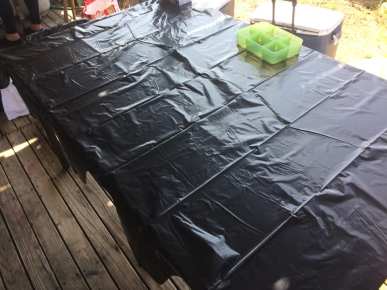
Safety First! Cover all tables and work areas. Don’t forget to wear gloves.

I also have cultivated an Amazon Store with all the stuff you will need, including a kit that contains Procion Dyes- All you need is a bag of Urea and the kit is ready to dye! Procion dyes are best for Cotton, ramie, hemp, rayon- Natural plant based fibers (not linen- that stuff is a bear to dye).  If you have blends with synthetic fibers (like polyester, acrylic, lycra), the color will not be as vibrant. Anything less than 50% natural fiber will end up being pastel.

Since Tie Dying can be a little intimidating, let’s break it down. In addition to your dyes and chemicals…

You will need:

  • A big open space (We use my parents backyard)
  • 2-3 6 foot tables covered in protective plastic (tarps or trash bags work well)
  • 1-2 Large Buckets (5 gallon buckets from Home Depot are great)
  • Access to warm water
  • Measuring cups and measuring spoons (I recommend plastic ones)
  • Plastic bags or plastic wrap (to cover up /wrap up garments after they have been dyed)

Here is my pinterest board with tons of great folding techniques and patterns. You are ready to fold and tie once you’ve selected your garments and laundered them without fabric softener. I love incorporating marbles, canning jar lids, clamps  to make tie dying more interesting.

Screen Shot 2017-11-26 at 8.19.02 PM.png
Folded, tied, and zip tied!

Once everything is folded/tied and secured (either with rubber bands, zip ties, or cotton string), it’s time to mix the washing soda and hot water. 1 cup of washing soda per gallon of water.  Mix together in the buckets, and soak the tied garments for 15 minutes-1 hour. The washing soda raises the pH of the garments allowing the dye to be more readily absorbed.

Washing Soda is NOT BAKING SODA.  Washing soda is caustic and will hurt you if you submerge your hands in it. Wear gloves when you handle it. Wring out the garments after soaking so they are damp, not dripping.  You can keep using the same water for your entire session.

40586919_10156428898611061_6925444721087086592_n.jpg
Our soaking bucket- it’s actually a plastic tote.

While your garments are soaking, mix up your dye.  The most dye will come directions, but remember to mix your water with Urea. 1/4C of urea to 1 quart warm water. Urea helps the dye dissolve and remain mixed. It also helps the colors stay vibrant.

TIME TO DYE! Once your soaked garments are wrung out, it’s time to apply the dye. If you aren’t sure which colors will look good together, Get a color wheel. It will help you with color placement too. When you tie dye, colors will run together, so using complementary colors will help your garments look better when they are finished.

Remember to apply dye all sides, and if your garment is bunched up a lot, you may need to squirt dye between the folds to make sure the dye penetrates all of the layers.

Screen Shot 2017-11-26 at 8.13.21 PM
Bags and bags of baby onsies!

After the garment is dyed, place it in a plastic bag, or wrap it up in plastic wrap. You want to lay the item flat.  Let the garments sit for 24 hours (or over night), rinse the garments one at a time under cool water until most of the water coming from our garment is clear or a very pale. Then remove the binding (rubber bands, zip ties, string).

Wash completed garments with Synthrapol. It’s laundry soap that binds the color molecules to the fabric and sheds the dye that is not bonded. Once you wash the finished garments with Synthrapol, the clothing won’t shed dye or rub off on you, you can use your regular detergent from then on out. I also throw a couple Color Catchers in the wash too for good measure.

Once your garments are dry, the are ready to wear! I use the word “garments”, but you can also dye fabric, bed sheets, even pillow cases.


Here is some of the most recent stuff I dyed:


Tie dye shirts make great gifts! You can also tie dye socks- That’s what Bitty Bird is getting in her Advent Calendar this year!

I have utilized Amazon links within this post, prices can change at any time, and I may receive a commission when you click the links to Amazon and purchase items linked. Commissions help cover the costs associated with blogging.

Cooking Tutorial: Spaghetti Squash!

We eat a lot of veggies. That was one of the huge lifestyle changes we made a few years ago that has helped us maintain healthier weights.

One healthy swap we made was to spaghetti squash instead of pasta.  A lot of healthy/food swap websites like Hungry Girl tout Spaghetti Squash as a good substitute for carb-y noodles.

Here is a quick tutorial on making spaghetti squash.

Screen Shot 2015-11-04 at 8.56.33 AM

  1. Select a squash that is firm and unblemished. Not sure what they look like? Here is the wikipedia article all about the vegetable with a few pictures.
  2. Chop the end with the stem off. You’ll need a good sharp knife. I love our Henckels Meat Cleaver.
  3. Chop the squash in half. I do it length-wise, so it takes less time to cook in the oven.
  4. Take a spoon and scoop out the stringy guts and seeds.  Discard them.
  5. In a large glass baking dish, place the squash halves cut side down.  Pour a 1/2 cup of water into the bottom of the baking dish.
  6. Bake at 350 for 30-45 minutes or until the squash are fork tender (about the same feeling as a baked potato).
  7. Remove baking dish from oven and set the squash halves on a cutting board.  Allow to cool for 10-15 minutes, or until you can comfortable handle the vegetable.
  8. With a fork, “rake” the interior of the veggie.  The “meat” of the interior should flake off in long strings that resemble broken spaghetti.
  9. Once complete, discard the exterior of the squash.
  10. Toss the “spaghetti” with the sauce of your choice.

1 medium sized spaghetti squash serves 2-3 people, with a serving size of about 1 1/2 cups. It’s yummy with sauce (Spaghetti/red sauce, pesto, or even a cheesy sauce), or just a little butter and herbs. It’s a great way to get extra veggies into your diet, or if you’re Gluten Intolerant, it’s cheaper (and tastier) than GF pasta.

Later today, I’ll be posting a recipe that uses spaghetti squash as a main ingredient! With winter veggies starting to make an appearance in grocery stores and farmers markets, you’ll start seeing more and more squash!