There are a lot of people around us who need help right now in our communities. There are so many ways to help neighbors, and I’ve collected a few of the ways that my family helps in the hopes it will inspire you to do the same.
You’re probably aware of mutual aid sites like GoFundMe, but do you know that there are other ways that you can help your friends and neighbors without breaking the bank or charging on your credit card?
Mutual aid is more than giving cash. It’s giving your time, goods from your home, or offering to help with chores or errands.
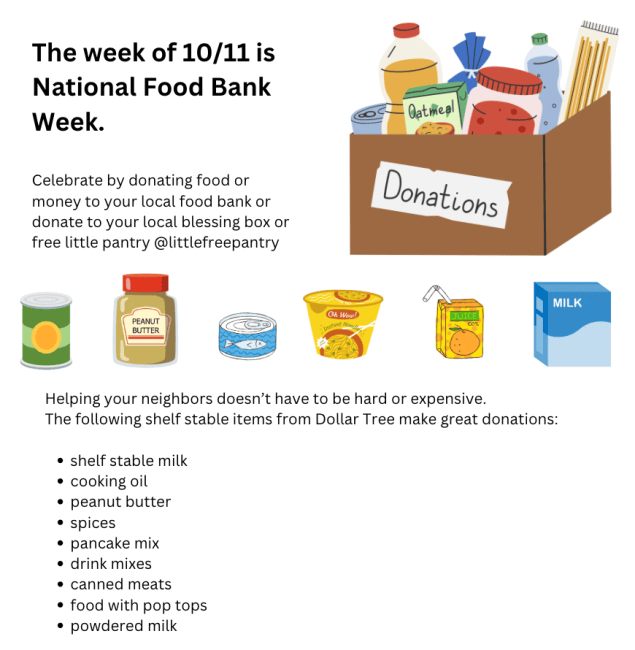
Blessing Boxes/Free Little Pantries. When I go to the grocery store, I allot $5-$10 to pick up canned goods or shell stable foods that are either ready to eat and have a pop top or require just the addition of water and heat. Things like chili, canned soup, water, only mac & cheese, Ramen, peanut butter, bread. These items are donated to our local Blessing Box, which helps our neighbors in need.
Filling a Free Little Library. You probably have a couple of books around your house that you read once, maybe twice, and you’re never gonna read again, or your kids have leveled up beyond picture books, and you’re not quite sure what to do with them. Look for a little library in your area. There are tons of them in my town, and I am always putting a paper back or two or a couple of kids’ books in when I see one that needs a couple more books in it
Check out your local Buy Nothing or Buy Nothing Like group. Check and see if there is a neighbor in need who needs something that you have. Either something in your home that is physical, maybe they need assistance with a project, or they are asking to borrow a tool.
I just finished up doing some summer cleaning and posted all sorts of items to share. I have gotten rid of a broken computer (someone was excited to use it for parts), an extra monitor, some blankets, and old sheets that are in great repair, but my son does not like the texture.
There are all kinds of ways that we can help our neighbors with what we have and the skills that we possess.
Talk Back: How have you helped in your community?
 The first Monday of October is National Child Health Day. I’m taking a little time today to share some ways you can keep your kiddos healthy while still staying on budget.
 May is upon us, which means it’s the downward slide into the end of the school year. It’s also that time of year when your teacher friends are a little more stressed than usual. For some states, standardized testing starts after spring break. For most classrooms, the supplies that were purchased in August have run out completely.
