My Favorite Egg Replacers for Baking!

The price of eggs has been increasing, at least in California for a few years. Between the law enacted in January of last year regarding farm animals in confinement, and the avian flu making it’s rounds, eggs can be upwards of $8/dozen.

That’s a lot. I love to bake, and eggs are commonplace in a lot of recipes. After some research and trail and error, here are some of the egg replaces that I use.
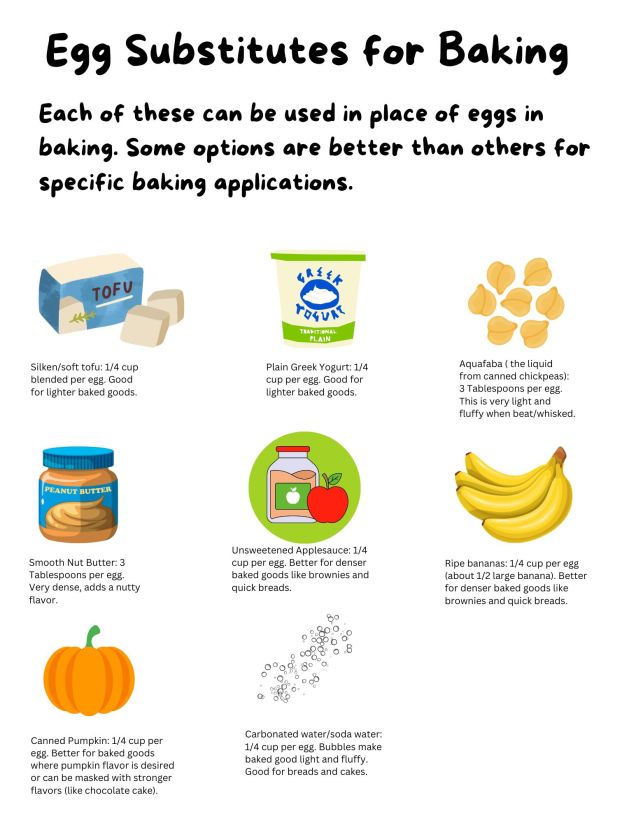
You’ll notice that for most of these substitutions, the measurement is 1/4 cup, which is about how much liquid is in a large sized chicken egg.

Not sure which one to use? Here is my handy guide:

For Cookies:

  • Aquafaba
  • Canned Pumpkin
  • Smooth Nut Butter

For Cake/Quick Breads:

  • Plain Greek Yogurt
  • Bananas
  • Canned Pumpkin
  • Carbonated Water
  • Silken Tofu
  • Applesauce

Brownies:

  • Canned Pumpkin
  • Unsweetened Applesauce
  • Bananas
  • Smooth Nut Butter

Looking for some recipes to use these on?


Jar Salads- Healthy Meal Prep!

I love salad. We eat a lot of veggies because of our Yasukochi Famil Farms CSA box subscription, and I’m always looking for new ways to serve veggies and keep them fresh.
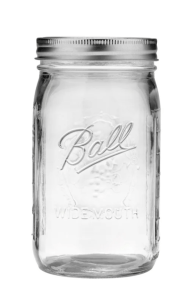
Jar salads have already had their heyday a few years ago, but they are an amazing meal prep idea. Many of us have Eating Healthy and Losing Weight are New Year’s Resolutions- Jar Salads are a great tool.

It’s quite popular to use wide Mouth quart Mason jars, but I’m a little clumsy, so I prefer Quart-sized deli containers.   I also find that Quart-sized deli containers are a little more economical and can easily be recycled when they wear out. And they stack really well in the fridge.

Whichever option you choose, here are some tips for perfecting your salad creations.

Whether you use a quart-size Mason Jar or a quart-size deli container, start with 2 tablespoons of dressing and build your salad.

Bottom Layer: The base where wetter ingredients go. Putting the wetter ingredients together helps keep the more delicate ingredients like lettuce crunchy. Ingredients for the bottom sections include: Dressing, salsa/sauce, tomatoes, guacamole, avocadoes, strawberries, citrus, and grains (rice, quinoa, pasta, farro).

Middle Layer: Beans, bell peppers, corn, seeds/nuts, onions, cucumbers, carrots, radishes, hard cheeses, sprouts, pickled veggies, hardboiled eggs, tofu, and other protein sources such as chopped chicken breast. Shredded cabbage or coleslaw blend/ shreds can also go on this layer.

Top Layer: Bite-size lettuce or other greens.


These salads can be really filling, depending on which ingredients you choose. 3-5 salads a week is a great start. Jar salads like this tend to last 5-7 days in the fridge, stored upright.