A Practical Guide to Setting A Budget (Part Three)

The first two parts (Part One, Part Two) of this series talked about the essentials of how to budget. This third part is for those of you who are having a difficult time making the ends meet to get your needs met.

I’m talking about when cutting cable and going cash only for groceries isn’t enough. When you need help. When there isn’t much (or anything) to eat. When the power might be shut off. When there isn’t money to put gas in your car to get to work or job interviews.

This is the most important thing to remember: It is ok to ask for help. It is ok to seek out services and take advantage of programs. Do not worry about what others will think- This pandemic and all of the fallout that has happened has affected so many of us. So many hardworking families and individuals need a hand up right now. 

A lot of the services and programs listed below are specifically for San Diego County. If you live outside San Diego County, I recommend that you call 211 anywhere in the US. They can help you find resources- all judgment free!

So when I talk about needs being met, I mean:

  • Shelter (Rent/mortgage assistance/utilities)
  • Food (Healthy food for you/your family and pets)
  • Comfort (Clothing, healthcare, medication)

Shelter:

  • If you have a mortgage, contact your lender for a forbearance. You may have to provide them with proof that you are unable to pay.
  • If you are a renter in San Diego, here is the County Rental Assistance site.
  • If you require assistance with your utilities, SDG&E has many programs and assistance available.
  • For your water/sewer bills, you will need to contact them directly. There are so many water municipalities in San Diego County.

Food: Food insecurity is a cause near and dear to my heart, so I have all kinds of resources to share!

Many food banks give out pet food as well- don’t forget to mention your furry friends when you complete your intake paperwork (which is oftentimes to find out demographic information to obtain additional funding from the government or private grants). Some do not require any paperwork at all.

Comfort: Being housed and fed is important, in addition to this I’ve added the comfort category. This includes clean, well fitting clothes, access to health care, and prescription medicines.

  • There are many resources for no and low cost clothing (besides thrift stores, which have become increasingly higher in cost in the past year). Naomi’s Closet, Closet on 54th, Charity’s Closet at Sonrise Church, Sharia’s Closet are all San Diego resources. I’ve been told that some Salvation Army churches offer free clothing vouchers to be redeemed at their thrift shops. Don’t forget your local Buy Nothing Group too! So many of your local neighbors are cleaning out their clothes and purging while they are stuck at home, you’d be surprised what your neighbors are will to share with you.
  • If you are in need of healthcare, there are several options. Medicaid/Medi-cal may be available for some. If you have had a “life event” (job separation, birth of a child, death of a spouse, marriage, etc.) you can look for health insurance in your state’s Health Insurance Exchange. Here is a link to California’s Exchange. There are frequently lower rates or discounts for those with certain income limits.
  • If you or family members take prescription medicines, look into discount programs like Singlecare (which you can access via the Fetch Rewards App and earn cashback/points), or GoodRX. Some pharmacies have their own discount programs too. Make sure to ask the pharmacy staff. Another option is to ask your doctor for medication samples when you are visiting them. Many doctors have medication samples in their offices, and most doctors are willing to help you when you tell them you need assistance with medication costs.


A Practical Guide to Setting A Budget (Part Two)

In our last post, I talked about the basics of starting a budget (you can read it here).

We ended with… What happens if you spend more money than you bring home? Don’t feel bad, It happens more than you would think. Living in a credit-based world, it’s easy to swipe, swipe, swipe your card and have it seem like it’s not real money.

How do you stop spending willy nilly and start saving money?

First of all, I went through our family budget line by line looking for ways to cut down on costs. This will take a little work, but it’s worth the savings. Here are a few ways that you may be able to save.

  • Cell Phones- I called and negotiated a new contract, and they were able to give us a small discount ($15/month).
  • Auto/Home Insurance- Called our insurance carrier (it’s the same for both). We went through both policies, and were able to adjust our annual mileage to lower mileage, and adjust a few things with our homeowner’s insurance to save some money too. (About $50/year)
  • Gas & Electric (power company)-Because of the big kids’ diagnosis, we were able to qualify for a discount. SDG&E (Our utility provider) offers several discounts. You can learn more about our experience and how we saved money here.  We also take part in OhmConnect, and that saves us money and gives us cashback. You can learn more about OhmConnect here. We save about a thousand dollars a year between the programs SDG&E offers and using Ohmconnect.
  • Internet- We ended up changing internet providers to save money. I know that not everyone has this ability, but it’s worth a call to see if you can get a better deal. We don’t have cable or a home phone, so there are no bundling deals that can save our family money. ($5/month)
  • Cable- We don’t have it, but if you are thinking of cutting the cable, it’s not all static and bunny ears like in the old days. Between Apple TV (ours is really old and it works great), Hulu, Netflix, Amazon Prime, and over the air TV, we aren’t suffering. (No savings for us, but maybe some for you?)

Secondly, I take cash out for Groceries ($100/week), gas ($60/week), and fun money (funds for the kids and I to do something fun during the week- usually a snack or treat at the zoo, admission to a museum, or renting a Redbox movie. $40/week). When the money’s gone, it’s gone. For our budget/spending- this has been the game-changer. Due to quarantine/lockdown the only fun we could have was ordering take out or expensive trips to the craft supply store/Amazon to keep us entertained. Now that we have parameters for spending money, I am taking a harder look at groceries and meal planning and low-cost to no-cost ways to have fun with the kiddos.

In addition to that, I didn’t set up Apple Pay on my phone. I don’t have a credit card attached to the app store on my phone. I don’t have any credit cards set up on my Amazon Account, or my Target App, or any of the purchasing apps on my phone. If I want to buy something I have to either go to a store or sit down at my computer and enter my credit card/debit card information. Taking that extra step to purchase stuff really helps me think about what I am buying and how much I am spending.

And I’m always looking for ways to make a little extra money. Side Hustles are a real way to make money. You can invest as little or as much time as you want.

You can still have fun and live on a budget. Don’t feel like having takeout? Spend some of your fun money on a couple steaks and have a BBQ at home one week. Rent a movie on Amazon Prime, and add some dollar movie candy to your grocery list (or hit up Dollar Tree). Close the curtains/ blinds and throw some pillows and blankets on the living room floor. We call that “Movie theatre night” and the kids love it.

Living during a global pandemic you have to think outside of the box.

My next (and last) post about setting a practical budget will be ready tomorrow and it’s going to be a little more serious. What to do/where to turn when you need help with the basics: Food, Shelter, and Comfort. And what you should cut out if you are struggling. For those who are struggling right now, this is written with you in my mind and heart.

A Practical Guide to Setting A Budget (Part One)

I’ve written about budgeting before, but now more than ever so many of us need to set up a budget that works. One that is easy to stick to. There are so many ways of doing a budget, so many styles- cash envelopes, bucket/different accounts, multiple debit cards for various budget items… It can be tricky. I’m going to be breaking down the household budget, and how it can be done, how to shave money off your household expenses, and save money without suffering or feeling like you are doomed to a life of instant ramen and tap water.

Recently I re-did the household budget after noticing that spending was…Outta Control. Here are a few things that helped me:

Track all of your outgoing expenses for three months. I made a list of all the bills, expenditures, etc., and went through the banking transactions online. Then I averaged them. Using the average for each, I plugged each one into a Google Sheets page.

Some of the categories I had are:

  • Mortgage (This includes impounds for our Homeowners insurance and property taxes)
  • Gas/Electric*
  • Gift Fund
  • Transfer to Savings
  • Life Insurance
  • Auto Insurance
  • Hulu
  • Car payment
  • Kids 529
  • Netflix
  • YMCA
  • Internet
  • Credit Card Balances
  • Student Loan Payments
  • Water Bill*
  • Groceries*
  • Fun Money (stuff to do with kiddos/girls nights in/date nights)*
  • Gasoline*

Of all of these categories, the only ones that have any difference per month are the ones I indicated with an asterisk (*). For Gas/Electric and the water bill, I averaged the cost over three months and used that amount for the budget.

The categories I included above are what is in my budget, you may have other items that my family does not. Some of the expenses such as Health Insurance and retirement savings come out of paychecks, so for our family, they are not included in our budget. You may wish to add them to your budget if you pay them directly.

Cash for some Budget Line Items: For items such as groceries, fun money, and gasoline I visit the ATM each week and take out cash. I paperclip the money for each budget line item together, and keep them separate in my wallet. When the money is gone, no more spending.

Doing cash for those line items really helps me take a hard look at shopping for groceries (this is when cash back apps, couponing, and price per unit knowledge all come in handy), and making sure that I am getting the best deal on gas (I have the gasbuddy app, it’s very useful). Any unspent money gets rolled over to the next week.

Making the ends meet: It’s important when you are adding up all expenses that once you add them up, subtract that amount from the money you bring in (wages, side hustles, selling plasma, whatever). If you are spending more than you  and you should be left with some money leftover. If you come to a negative number… Bruh, we gotta talk.

For example (and this is just an example):

  • Total income (including side hustles): $5000
  • Total household budget per month: $4500
  • Total amount leftover: $500 This leftover amount can be kept in your main account for unforeseen expenses, or move it to savings, or pay down extra on reoccurring debts (like car payment, student loans, or credit cards).

Uh, so if your number comes back negative, like this example:

  • Total income (including side hustles): $4500
  • Total household budget per month: $4600
  • Total amount leftover: -$100

Yeah. Bad times, my friends. That means you need to cut $100 from your budget. My next post about budgeting will go over what and how you can cut from your budget without feeling like you are suffering or living hand to mouth. I promise nothing crazy or nothing that I would not do myself if needed. And you can expect that post tomorrow.

Not all all related to setting a budget, but when I was searching for Budget stock photos, this photo of fruit salad was tagged “budget”. And I love fruit salad, so I had to include it. 

California Residents: Expect a refund on your August bill!

CPUC.jpgThe Climate Credit that we’ve all grown accustomed to seeing on our April and October bills has been moved to August and September when most Californians have higher utility bills due to the weather.
In August and September, there will be a credit each month of $32.28 on the Electricity portion of each ratepayer utility bill.

Changing the distribution months will not change the total value of the climate credits you receive in a year. The shift will provide bill relief for customers and reduce bill volatility.

If you’re having trouble paying your utility bill and to learn more about the available resource to help you and your household, please visit sdge.com/coronavirus.

Visit Energy Upgrade California to learn about ways to lower your energy usage.

And if you want to save energy and earn money, check out my post about Ohm Connect.
What is the California Climate Credit?

This August* your utility bill will include an electric credit identified as the “California Climate Credit.” Your household and millions of others throughout the state will receive this credit on your utility bills.

In the past years, the electric credit was applied in April and October, and the gas credit was applied in April. For 2020 and 2021, the California Public Utilities Commission authorized SDG&E to temporarily shift the electric credit to be applied in August and September.


*Billing periods vary by utility and may not always coincide with a calendar month. If you don’t see a Climate Credit in the bill that arrives this month, it will appear in the bill you receive next month. If you are an electric customer, the electric credit will appear as a line item on the electric portion of your bill. If you are a gas customer, the gas credit will appear as a line item on the gas portion of your bill. If you receive both electric and gas service, you will see the electric and gas credits on the respective portions of your utility bill.

The CPUC regulates privately owned electric and natural gas companies and serves the public interest by protecting consumers and ensuring the provision of safe, reliable utility service and infrastructure at reasonable rates, with a commitment to environmental enhancement and a healthy California economy. For more information about our work visit www.cpuc.ca.gov. If you have a question or complaint concerning a privately owned utility, call 1-800-649-7570 or visit or visit http://consumers.cpuc.ca.gov/CABUtilityComplaint.aspx.

California Utility Bills Receive a Credit in April!

OLYMPUS DIGITAL CAMERAThe Climate Credit that we’ve all grown accustomed to seeing on our April and October bills has been moved to August and September when most Californians have higher utility bills due to the weather.

However, the PUC (Public Utilities Commission) is giving every California ratepayer a credit of $21.11 on the GAS portion of their utility bill this month.

In August and September, there will be a credit each month of $32.28 on the Electricity portion of each ratepayer utility bill.

Changing the distribution months will not change the total value of the climate credits you receive in a year. The shift will provide bill relief for customers and reduce bill volatility.

If you’re having trouble paying your utility bill and to learn more about the available resource to help you and your household, please visit sdge.com/coronavirus.

Visit Energy Upgrade California to learn about ways to lower your energy usage.

And if you want to save energy and earn money, check out my post about Ohm Connect.


Tips to Reign In and Out Of Control Family Budget: Taking Advantage of Discounts

959b176d7a237c76fc19ff89cdfc6904.jpgPreviously we talked about shopping your Cell Phone service, Internet service, even your Auto/Home/Health insurance.

Sometimes switching companies doesn’t yield you any savings. At that point, turn to your current providers and see if there are any additional discounts or perks that you could be taking advantage of and are not currently receiving?

Example: Some cell phone providers (Like T-Mobile) offer perks or freebies weekly. Free tacos, backpacks, free Netflix subscriptions, and other swag are some of the other cool things that they have offered in the past. AT&T has a program called AT&T Thanks where customers can score varying freebies and deals depending on what type(s) of service they have with AT&T.

Some Auto Insurance companies offer discounts for good students (High school and/or college), safe driving/accident-free, defensive driving courses, and low mileage discounts. It’s worth a call in to see if you can score any extra discounts!

What about services that you can’t shop around?

Utilities are a big one- We can’t shop utilities here in San Diego. SDG&E is the only name in the game here.

BUT- there are ways you can save and even earn money!

Did you know that most local utilities (in San Diego county that means SDG&E) will come out and inspect your AC/furnace for free at the beginning of each season? They can let you know if your furnace or AC is running in tiptop condition, and they can also check to see if your pilot light is lit and safe to run your furnace.

If you are in a lower income or you have a medical condition that requires continue with usage of electricity, SDG&E and other utilities frequently have a medical baseline or low-income program that you can apply for to save money on your utilities.

Other ways that you can save money on your utilities include signing up for services like Ohmconnect, which help you conserve electricity during peak demand hours, which not only helps you save money, but you’ll be saving extra electricity as well.

We’ve been members of them connect for upwards of five years, and we earn about $100 a year cashback from home connect, in addition to the money that we save on our SDG&E bill. You can learn more about Ohm Connect Here.


California Climate Credit- Savings on Your October Utility Bill!

Screen Shot 2019-10-10 at 10.10.07 PM.pngWOO HOO!! It’s back! The second California Climate Credit  is back for it’s second installment of the year!

And if you have any of the following utilities: PG&E, SDG&E, SCE Pacific Power and Liberty Utilities, your October bill will have a credit.

The California Climate Credit. From the CPUC website:

“Twice a year, millions of California residents receive a credit on their utility bill identified as the “California Climate Credit.”  The California Climate Credit is part of California’s efforts to fight climate change.  This credit is from a state program that requires power plants, natural gas distributors and other large industries that emit greenhouse gases to buy carbon pollution permits.  The credit represents residential utility ratepayers’ share of the payments from the State’s program.  The credit program was created by the CPUC, which also oversees the program’s implementation.

Currently, all residential and eligible small business electricity customers of PG&E, SDG&E, SCE Pacific Power and Liberty Utilities receive the credit, as do all Community Choice Aggregator (CCA) customers.  In addition, natural gas residential customers of PG&E, SoCalGas, Southwest Gas, and SDG&E also receive the credit.  Customers don’t need to do anything to receive the credit – it is automatically applied to their bills.  The credit amounts vary among utilities, CCAs and from year to year.

If you’re not sure whether you’re receiving the Climate Credit, the first thing to do is contact your utility or CCA, the same as you would do with any billing questions.  That’s because although the CPUC oversees the credit and can help with any remaining questions you have, your utility or CCA is best positioned to access your individual records and answer questions about individual accounts.”

In addition to this credit, we also use the TIME OF USE billing to our advantage. Here is an article I wrote about last summer with some tips about how to save on your utility bill. Time of Use billing isn’t for everyone, but we use it as I am able to do the bulk of our energy using chores during off-peak hours, such as dishes and laundry.

And one thing that I find super helpful- We signed up for Ohm Connect a few years ago and it texts and/or emails you when you should conserve more power due to the demand on the power grid. It’s a win-win situation: You save money on your power bill, and you earn points from Ohm Connect that you can cash out for Paypal, Amazon or Target Gift Cards, OhmConnect store credit (to buy energy-efficient thermostats, smart plugs, etc.) You can learn more about OhmConnect here. When you sign up here and link your utility account, you’ll earn $10 in rewards! We’ve earned over $50 in 2019 so far!


**Disclaimer: This post contains affiliate links. I may earn a small commission if you click on links or make purchases. However, I only post about stuff that I like and use for my family.

7 Frugal Ways to Beat The Heat!

194b11616dcabd574431ee4f2f0a0e52.jpg
Ok, so it’s not *that* hot, but close…

This week has been slightly hellish. It’s hot, humid, and just so gross no one wants to move.

It’s too expensive for us to run our AC all the time (Thanks SDG&E!), and really, I don’t want to spend all day in the house, so here are my top 7 Frugal Tips to Beat the Heat in San Diego!

  1. Check out your local library. Both County Libraries and City of San Diego Libraries have awesome summer programs for kids and adults!
  2. There is still time to sign up for Kids Bowl Free All Summer! Just pay for bowling shoe rental!
  3. Visit Balboa Park for Free Tuesdays at various museums each week. Another free activity in Balboa Park is the Botanical Garden and Lily Pond. Right next door is the Spanish Art Village, which is fun to explore as well. Pack some snacks and make a day of it.
  4. Check out your local indoor mall for fun family activities. In San Diego, we’ve got a couple- Plaza Bonita, Parkway Plaza, and Westfield North County (the mall formerly known as North County Fair). Each one has monthly fun activities for kids and families- just check your local mall’s website.
  5. Have you seen the kinds of Groupons that are available lately? Uptown Jungle has 6 options! There are all kinds of fun activities from Axe throwing to waterparks, you’ll be having all sorts of frugal adventures in no time.
  6. Get in the Water! Beach, lake, river, local pool… whatever. Heck, get in a kiddie pool and splash around. Don’t forget the SPF and snacks.
  7. If you want to stay home, close up all the windows, draw the shades/curtains, turn on all your fans, set the AC to something comfy but not arctic (for us, that’s 80-82 degrees when it’s going to be over 100 outside). Once the house is chilled out, pop some popcorn and assemble some awesome snacks (We had this pumpkin/fuck it bucket because I received it in the mail to review), make a pillow fort and watch some fun movies. We did that the other day. We watched Cloudy With a Chance of Meatballs and Zootopia.

If you are looking for a way to cool down in your pillow fort, this little dude is pretty cool (haha, temperature pun!)

Talk Back: What are your favorite ways to beat the heat?

California Climate Credit- Savings on Your April Utility Bill.

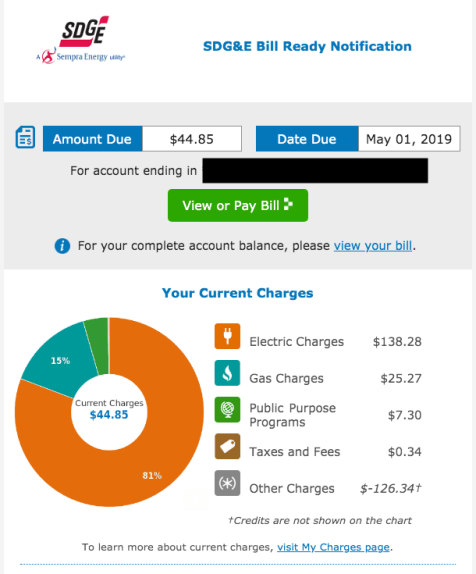
Screen Shot 2019-04-13 at 9.24.20 AM.pngImagine my joy when I opened my email this morning and I found out I have $44.85 SDG&E bill!

And if you have any of the following utilities: PG&E, SDG&E, SCE Pacific Power and Liberty Utilities, your April bill will have a credit.

The California Climate Credit. From the CPUC website:

“Twice a year, millions of California residents receive a credit on their utility bill identified as the “California Climate Credit.”  The California Climate Credit is part of California’s efforts to fight climate change.  This credit is from a state program that requires power plants, natural gas distributors and other large industries that emit greenhouse gases to buy carbon pollution permits.  The credit represents residential utility ratepayers’ share of the payments from the State’s program.  The credit program was created by the CPUC, which also oversees the program’s implementation.

Currently, all residential and eligible small business electricity customers of PG&E, SDG&E, SCE Pacific Power and Liberty Utilities receive the credit, as do all Community Choice Aggregator (CCA) customers.  In addition, natural gas residential customers of PG&E, SoCalGas, Southwest Gas, and SDG&E also receive the credit.  Customers don’t need to do anything to receive the credit – it is automatically applied to their bills.  The credit amounts vary among utilities, CCAs and from year to year.

If you’re not sure whether you’re receiving the Climate Credit, the first thing to do is contact your utility or CCA, the same as you would do with any billing questions.  That’s because although the CPUC oversees the credit and can help with any remaining questions you have, your utility or CCA is best positioned to access your individual records and answer questions about individual accounts.”

The 2nd credit will be on the October bill.

In addition to this credit, we also use the TIME OF USE billing to our advantage. Here is an article I wrote about last summer with some tips about how to save on your utility bill. Time of Use billing isn’t for everyone, but we use it as I am able to do the bulk of our energy using chores during off-peak hours, such as dishes and laundry.

And one thing that I find super helpful- We signed up for Ohm Connect a few years ago and it texts and/or emails you when you should conserve more power due to the demand on the power grid. It’s a win-win situation: You save money on your power bill, and you earn points from Ohm Connect that you can cash out for Paypal, Amazon or Target Gift Cards, OhmConnect store credit (to buy energy efficient thermostats, smart plugs, etc.) You can learn more about OhmConnect here.

San Diego, CA area Residents: Save on your SDG&E bill!

Screen Shot 2018-08-16 at 9.37.22 PMLooking for more ways to saving money on your power bill without doing crazy stuff like turning off your water heater when you aren’t home and unplugging everything (including your fridge) during the day? Ok, so I’ve been watching episodes of Extreme Cheapskates on Netflix (and it’s scary what people will do to save a few bucks), but I did find out about a great legit program that can help San Diego, CA area residents!
The Energy Savings Assistance Program can help lower your monthly bill, while making your home more comfortable.

We had SDG&E come out when we lived at our last home, and  they replaced our lightbulbs, checked our fridge and microwave to make sure they were energy efficient. They also gave use low flow shower heads, sink nozzles, and they are sent out a contractor to do some landlord approved improvements (replace the worn weather stripping) to make our home a little more energy efficient.

You may rent or own, and if you qualify, SDG&E’s authorized contractors will come to your home and may provide a variety of services. Apply Online or schedule an appointment at 1-866-597-0597. If you are eligible for the Energy Savings Assistance Program, you are also eligible for a CARE savings of 20% on your monthly bill.

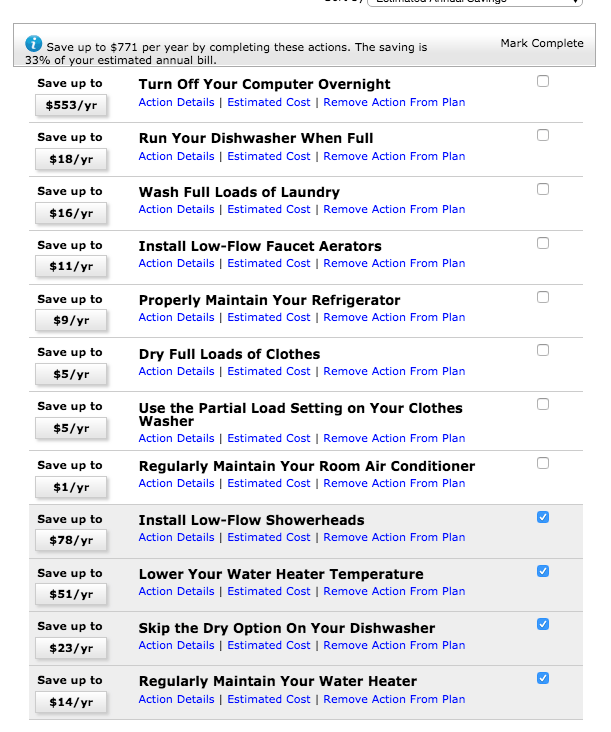
If you don’t qualify for that program, you can also check out other ways to save on the SDG&E website, such as changing you plan (yes, there are various plans and pricing structures), and there is a “My Energy Overview” where SDG&E will give you realistic suggestions and tips on how you can lower your electricity and gas consumption to save money.

I went through it today, and made an action plan based on how much I want to spend out of pocket, how much time I have to invest, and how handy we are.  As you can see, none of the stuff is too expensive our crazy, and if i do all of it, we’ll be save up to $771 per year!

Screen Shot 2018-08-16 at 9.43.33 PM.png

As you can see, I’ve already done some of the items on the list, some will take getting used to- including leaving reminder notes in areas (I’m putting a sticky on the washer to remind myself to switch the water level/washer setting and water temp as needed).

And one thing that I find super helpful- We signed up for Ohm Connect a few years ago and it texts and/or emails you when you should conserve more power due to the demand on the power grid. It’s a win-win situation: You save money on your power bill, and you earn points from Ohm Connect that you can cash out for Paypal, Amazon or Target Gift Cards, OhmConnect store credit (to buy energy efficient thermostats, smart plugs, etc.) You can learn more about OhmConnect here.

What are your tips for keeping your power bill low?


**Disclaimer: This post may contain affiliate links. I may earn a small commission if you click on links or make purchases. However, I only post about stuff that I like and use for my family.