 It’s true: March is frozen food month. In previous years, there were deals and sales on frozen foods that you just couldn’t be beaten. But with the changing economic climate, a lot of these offers and deals have sort of dried up.
That brings us to what you can freeze. A lot of us are taking advantage of what little sales we can find, stocking up on pantry staples, and making sure that our pantries and freezers are full of food and ingredients. Freezing food is also a great way to keep leftovers that you may not want to eat within the next two or three days after making them.
I freeze a lot of stuff. When I make batches of soup, I tend to freeze 2 to 4 portions of it so that we can have a meal later, and all I have to do is defrost and heat.
When we have fruits and vegetables that are getting a little too ripe for us to eat, I will chop them and put them in Ziploc bags in the store in the freezer.
Here are other things that you can freeze with a little bit of prep work:
Shredded or grated cheese. Blocks of cheese tend to crumble when defrosted.
Milk: Unopened gallons of milk, can be stored. I recommend you open and pour off/drink about a quarter of a cup before you put the lid on tightly and put back into the freezer. This step is not needed with paper curtains.
Bread/muffins/tortillas: Make sure you put it in a freezer-safe Ziploc container/bag to keep it from getting freezer-burnt.
Most fruits and vegetables can be frozen. I recommend cutting everything up into bite-size pieces and storing them in zip-top/Ziploc bags. I do this with vegetables that I can put into soups and stews or casseroles and fruits that could be incorporated into smoothies later. Making sure everything is cut up into bite-size pieces means that it will cook more uniformly, and smaller pieces of fruit blend a little easier. Spinach and some heartier leafy greens like kale can also be frozen!
Soups: As previously stated I freeze portions of each batch of soup I make so that we can have a quick easy meal later on down the road. Just make sure that it is cooled it to room temperature before you put it into the freezer.
Casseroles: Did you accidentally make too many potatoes? It’s OK, just store them in a airtight freezer safe container, and you could have leftovers down the road. When you reheat it just defrosted it in the refrigerator and then heat like you normally would.
Pizza: You can freeze leftover pizza. Not that that happens very often to my house, but I have been known to put pieces of pizza between parchment paper in a Ziploc bag and toss it in the freezer.
Pizza dough: Speaking of pizza, you can also freeze pizza dough or bread dough. I tend to make a triple batch of pizza dough, and once it has had its first rise, I punch it down, knead it, and separate it into greased Ziploc bags. You can either butter the inside of the bag, or you can spray it with spray release.
Once you’re ready to make pizza, just take the pizza dough out of the freezer, leave it in the bag on the counter, and depending on the ambient temperature of your kitchen, in about 4 to 6 hours. The pizza dough will be at room temperature. You can give it one last knead before you roll it out and bake it.
Now that you know how to freeze all sorts of things, you too can keep your freezer well stocked and cut down on food waste.
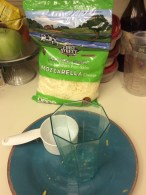 Once I’m home from the store, I set up my cheese packaging station. All you need is a stack of ziploc bags, a glass, a salad plate, and a measuring cup. (stack of bags not shown in this photo)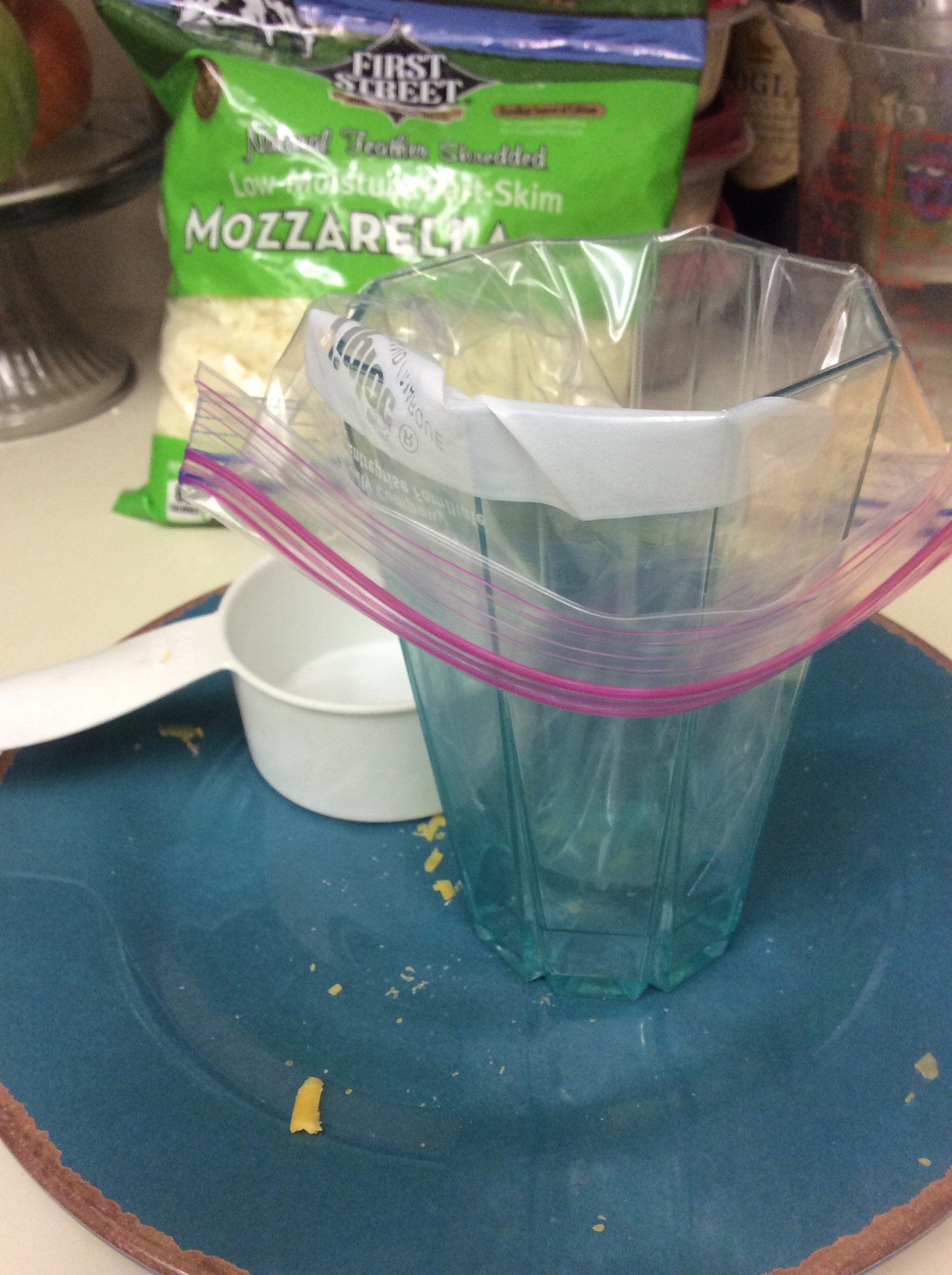

 Hewes Family Fun